
Proportion
Width against height, and each tooth against its neighbour. Proportion is what the eye reads first, long before it registers shade, and it is the single thing most often left alone in work that looks almost right.
Smile Gallery
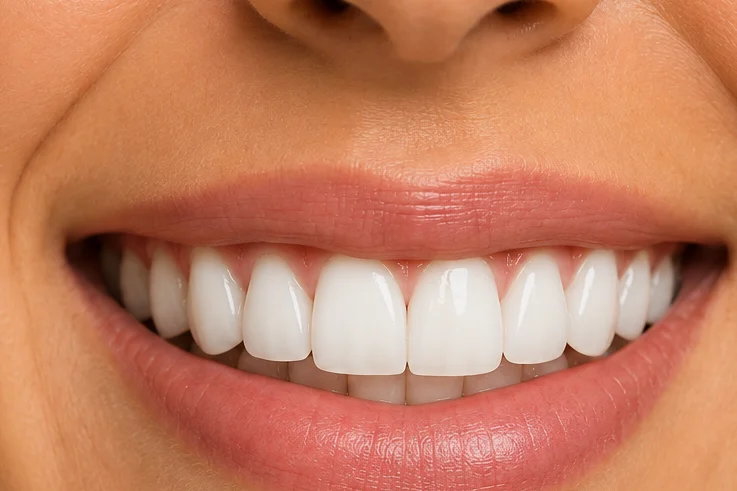
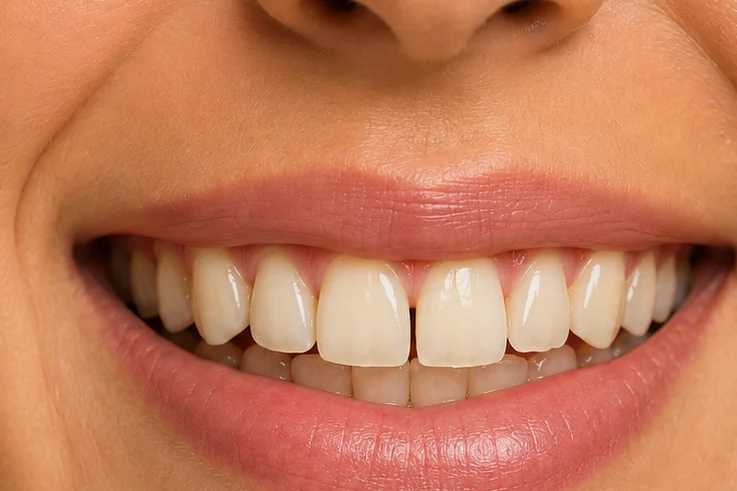
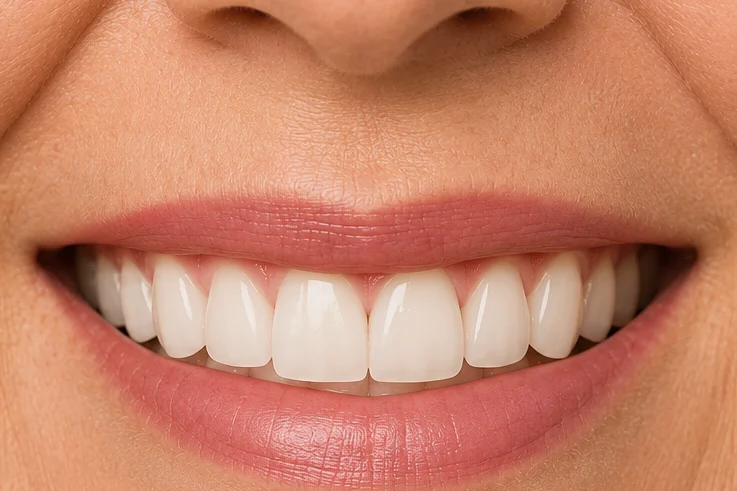
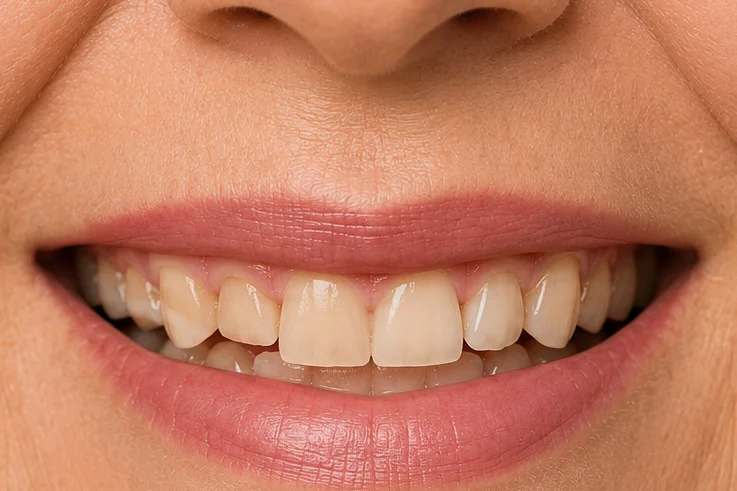
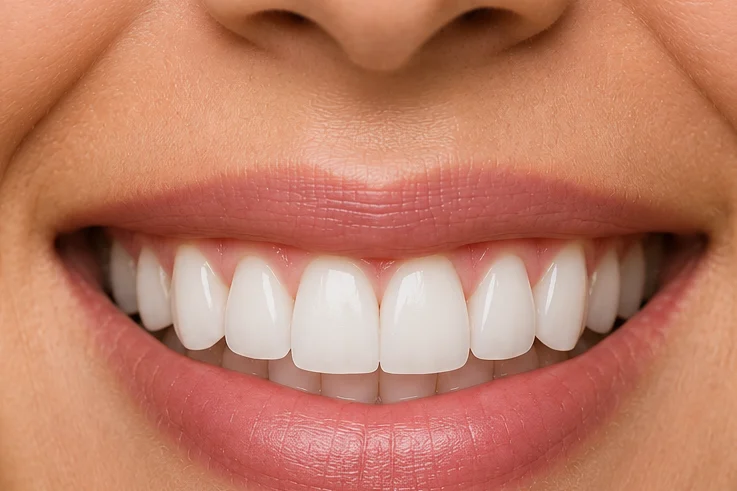
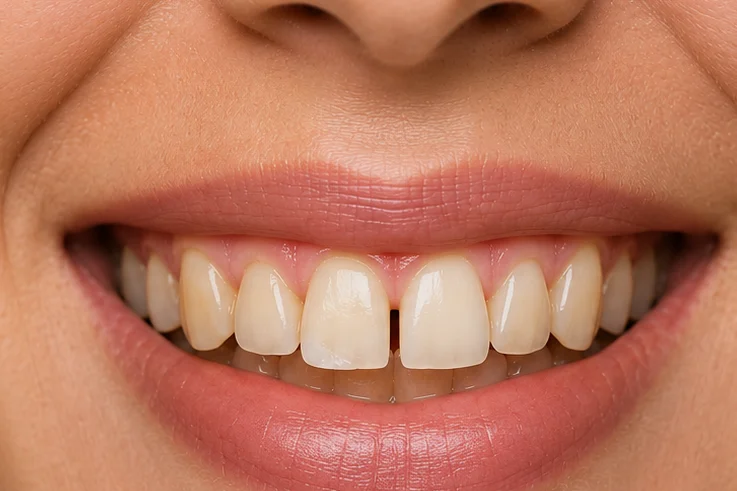
The studies below are generated images of the design language we work in rather than photographs of patients. Drag the divider on each to compare. Alongside them is what those qualities actually are, and how to read any cosmetic gallery — including this one — with a sceptical eye.
About These Studies
Every study on this page is a generated image, not a photograph of a patient.
Porcelain Veneers
Representative design concept — illustrative, not an actual patient.
Smile Makeover
Representative design concept — illustrative, not an actual patient.
Whitening & Bonding
Representative design concept — illustrative, not an actual patient.
Gallery imagery is illustrative only and does not depict real patients or actual treatment results
The Design Language
A comparison slider shows that something changed. It does not show what was being aimed at. These six qualities are the vocabulary of the design work, and between them they explain most of why one result reads as natural and another does not.
Width against height, and each tooth against its neighbour. Proportion is what the eye reads first, long before it registers shade, and it is the single thing most often left alone in work that looks almost right.
How much tooth shows at rest, when you speak, and in a genuine smile. A design that ignores the frame produces teeth that are correct in isolation and wrong on a face.
Aimed at the level the rest of your face supports rather than the brightest available. Tone that outruns the eyes and skin around it is the most common way cosmetic work announces itself.
Natural enamel is more translucent toward the edge and denser toward the gum. Reproducing that gradient is the difference between a tooth that catches light and one that simply blocks it.
Fine surface detail that scatters light rather than reflecting it flatly. Polished away, it produces the uniform sheen that reads as dentistry from across a room.
Faces are not symmetrical and neither are convincing smiles. The aim is balance rather than mirror-image matching, which is why a perfectly even result can still look subtly false.
Reading a Before & After
This applies to every cosmetic dentistry gallery you will look at while choosing, and we would rather hand you the questions than hope you do not ask them.
A cooler, brighter light source lifts apparent shade on its own. Where the two frames of a comparison are not lit identically, some of the change you are seeing belongs to the lamp rather than the treatment.
A few degrees of rotation alters apparent tooth width and how much of the arch is visible. Two photographs taken from different positions are not a comparison, however honestly they were captured.
A tight crop on the teeth removes the face that gives them their proportion. The useful question of any result is how it looks in a whole-face photograph, not a close-up.
You live in a moving face. Whether a design holds up while speaking and in an unforced smile matters far more than whether it photographs well held still, and no gallery can show you that.
What These Are
The three studies above are generated images. They are not photographs of patients, not records of treatment that took place, and not the work of any practice. They exist to show a design sensibility on a website that demonstrates website design.
They look like photographs because they were generated to, which is precisely why the section above asks you to be sceptical of galleries that look like this one. A convincing image is evidence of nothing on its own.
A real studio would show real cases here, with consent, in consistent lighting and framing, and captioned with what was actually done. Since Clario Smile Studio is a fictional practice, generated studies are the only honest option available to this page.
Anything less than that is decoration, and it should be read as decoration.
The corollary is that no gallery, ours or anyone’s, can tell you what your own smile would look like. That question is answered by wearing the trial design on your own face, which is the second stage of the method for exactly this reason.
Begin Your Smile Design
A generated study is a starting point for a conversation, not a preview of a result. The wearable trial mock-up is the part that actually answers the question.
Request a consultation